Blog
Sitting Still Isn't Focus: How Movement Helps Students Learn
You're in the middle of explaining the task when you notice a foot in the third row bouncing nonstop. In the back, someone has stood up and is working at the edge of the room. And the question pops up before you can stop it: are those two even taking any of this in?

I know that moment well. You're juggling so much at once, the content, the clock, the next test, the pile of grading that isn't going anywhere. And somewhere in the back of your mind sits an old idea many of us grew up with: kids who sit still are paying attention, and kids who fidget aren't.
Here's a different way to see it, and I hope it takes a little weight off. Both of those students are moving, and both of them can still be learning. Movement and focus aren't opposites.

Focus doesn't always look the same
Being focused doesn't mean the body stays perfectly still. Whether a student is with the task shows up somewhere else entirely: do they understand it, are they working on it, and will they remember it later?
For some students, moving is actually how they regulate their arousal, meaning how they manage their own attention and tension so they can get the work done. You may have come across two terms for this. Fidgeting covers small movements like a bouncing foot or busy fingers. Stimming means repetitive, self-regulating movements that can feel good or bring relief. Both terms describe what you see, and neither is a diagnosis, so there's nothing for you to label. You're simply allowed to notice.
Physical activity can also noticeably reduce attention problems in students with ADHD, and movement seems to work best when kids have to think at the same time. That doesn't mean every kind of movement helps every student, though. During transitions, for example, plenty of students move and talk more, with or without ADHD, and from the outside you can't tell for sure whether it helped or got in the way in that moment. Short breaks and time to move can still be sensible accommodations in your classroom.

Sitting still isn't a reliable test
A perfectly quiet student can be miles away, while one who's moving can be following every word and working through the content closely. So instead of looking at posture first, look at whether the task makes sense to them and whether the work is moving forward.
One simple question after a work period helps me with this: “What helped you stick with it?” I've often been surprised how precisely students answer when you ask honestly and without judgment.
If you want to take notes, write down the situation, the task and what happened, and leave out any guesses about a diagnosis. That protects your student, and it protects you too.

A tip you can try tomorrow: five ways to make room for movement in class
-
1. Allow quiet movement
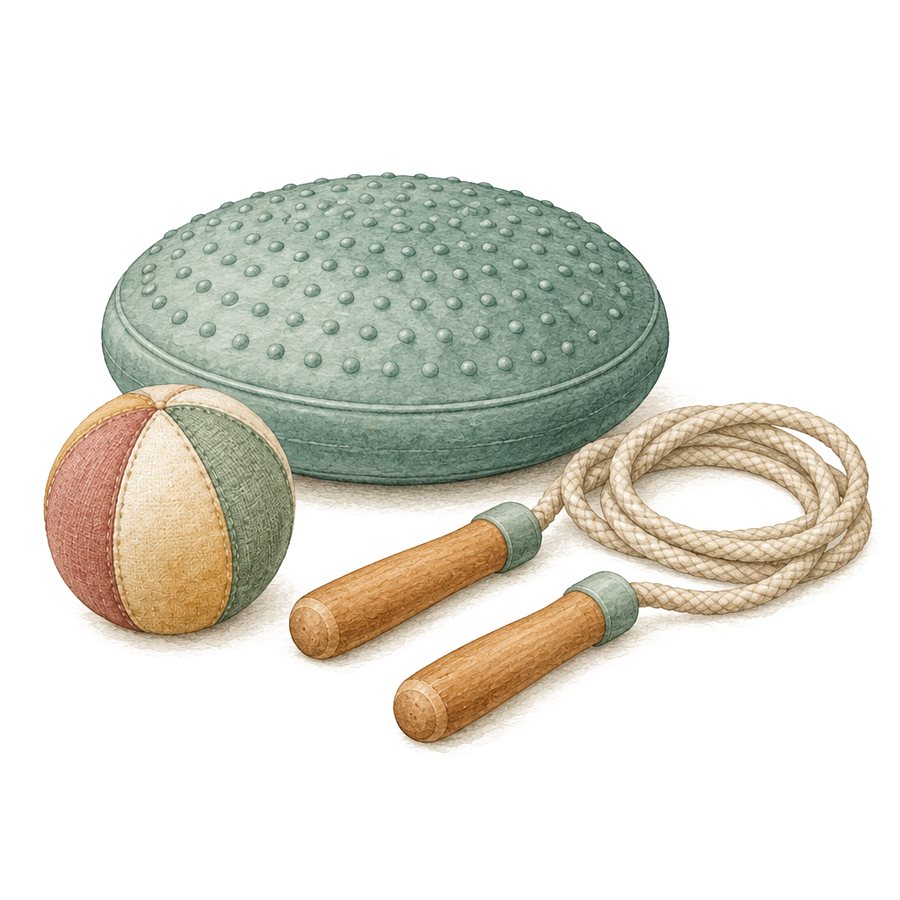
A bouncing foot, a resistance band around the chair legs, or a standing spot can all be good options. The only conditions: the movement doesn't put anyone at risk and doesn't pull attention away from the learning goal.
-
2. Plan short switches
Build a clear movement job in between longer stretches of work. Fetching books, wiping the board, or one good stretch can be enough. It doesn't need to take long.
-
3. Offer a choice
Write two or three options on the board where everyone can see them. Students pick one without having to justify it in front of the class.
-
4. Get the timing right
Some students need to move before a demanding task, while others work better when they can move a little during it.
-
5. Watch what changes
A solution can work beautifully one day and get in the way the next. That isn't failure. Change just one thing and take another look.
When movement signals overload
Sometimes more movement is a sign that stress is building. In sensory overload, too many stimuli hit at once and a student may barely be able to respond to what's around them. A shutdown is a quieter, less visible way of withdrawing when it all becomes too much.
In moments like these, you don't need to do a lot, just the right things: cut down the stimuli, keep your words short, and give time. Don't expect an explanation on the spot. And it helps to plan ahead where a student can take a short break, so you're not hunting for a spot in the middle of it.
Planning movement together
Talk the options through during a calm part of the day, so nobody has to decide in the middle of feeling overwhelmed, not your student and not you.
Make the limit concrete: “You can stand as long as the aisle stays clear.” Or: “You can bounce your foot as long as you can still hear the person across from you.” Sentences like these balance independence with consideration for others, and they make it clear to everyone how you'll judge whether it's working. They're also allowed to change, because a good solution doesn't have to stay the same forever.

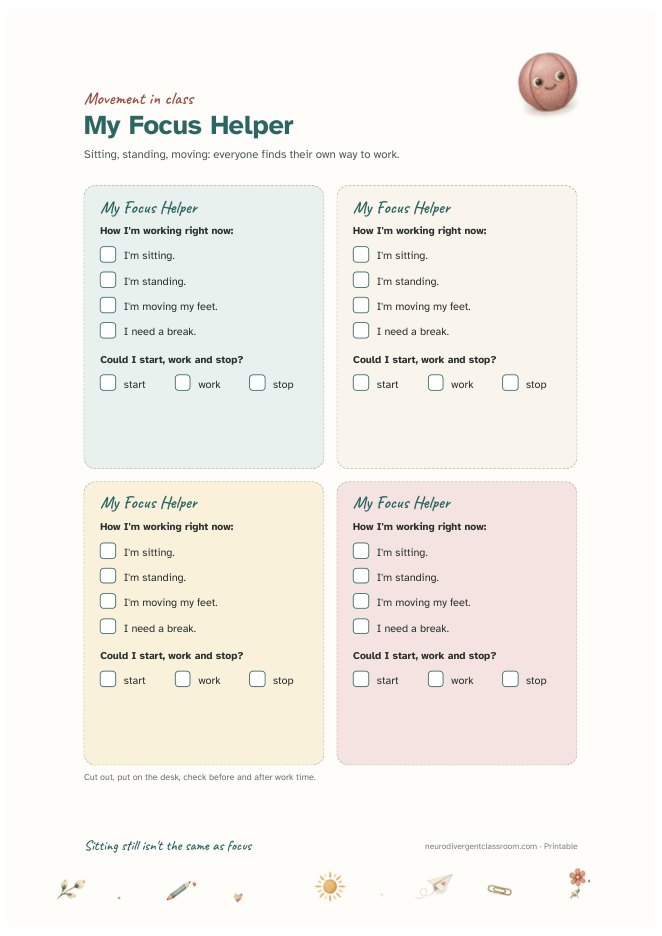
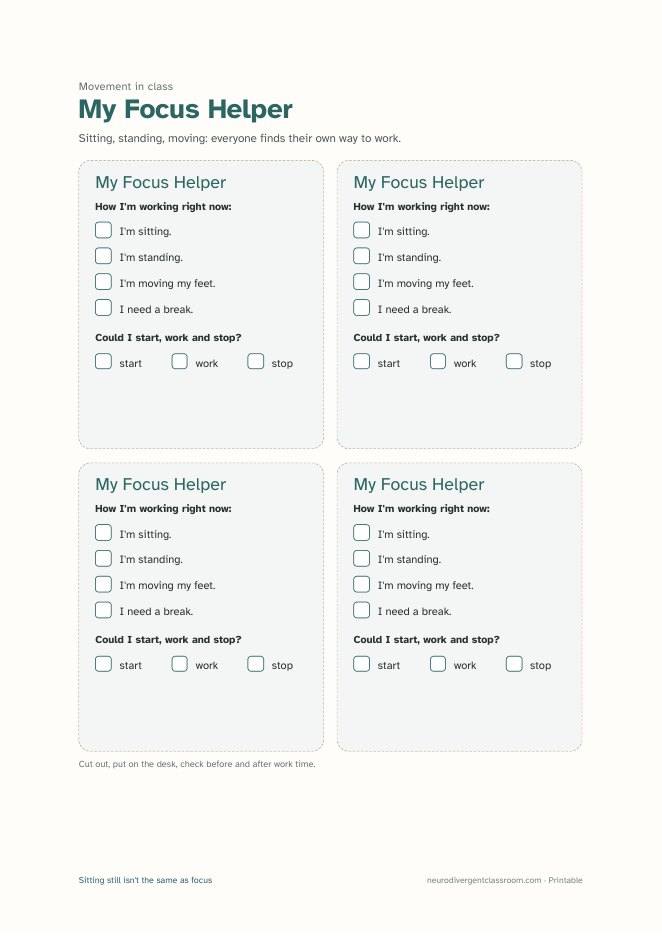
Download: “My Focus Helper”
This little card gives your students words for what helps them while they work. They pick from “I'm sitting,” “I'm standing,” “I'm moving my feet,” and “I need a break,” with no explaining in front of the class. After the work period, they look back with a single question: “Could I start, work and stop?” That way you can figure out together what really works instead of guessing. The card fits elementary school as well as middle school, and since it has no names, diagnoses or health information on it, it can sit out in the open on the desk.
Every printable comes in a colorful and a simple version. Choose the one you like to work with. Click the image to open the printable.
And one just for you
A page to take a breath and write things down, no lesson planning involved.
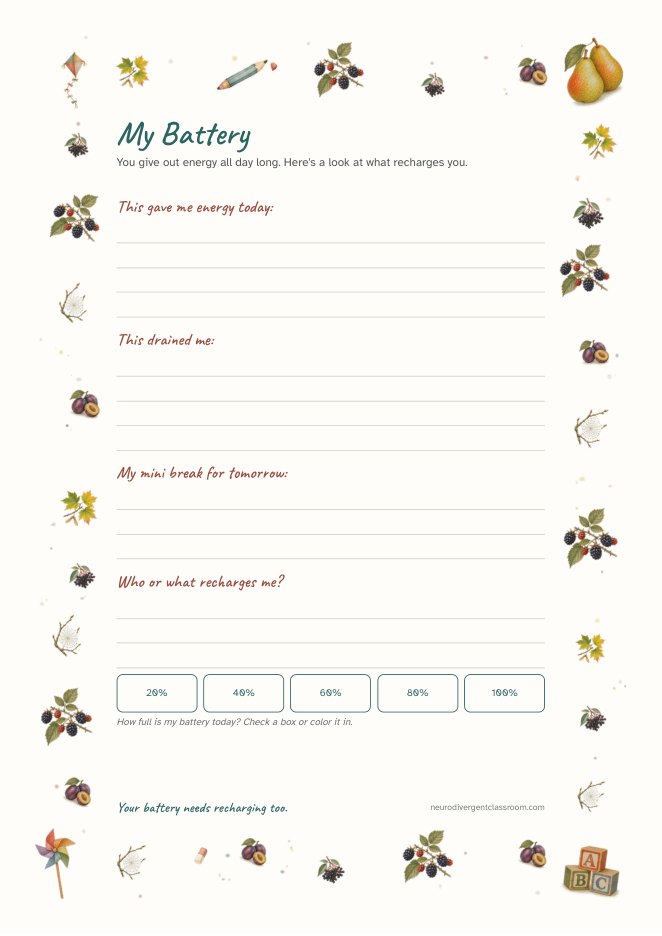
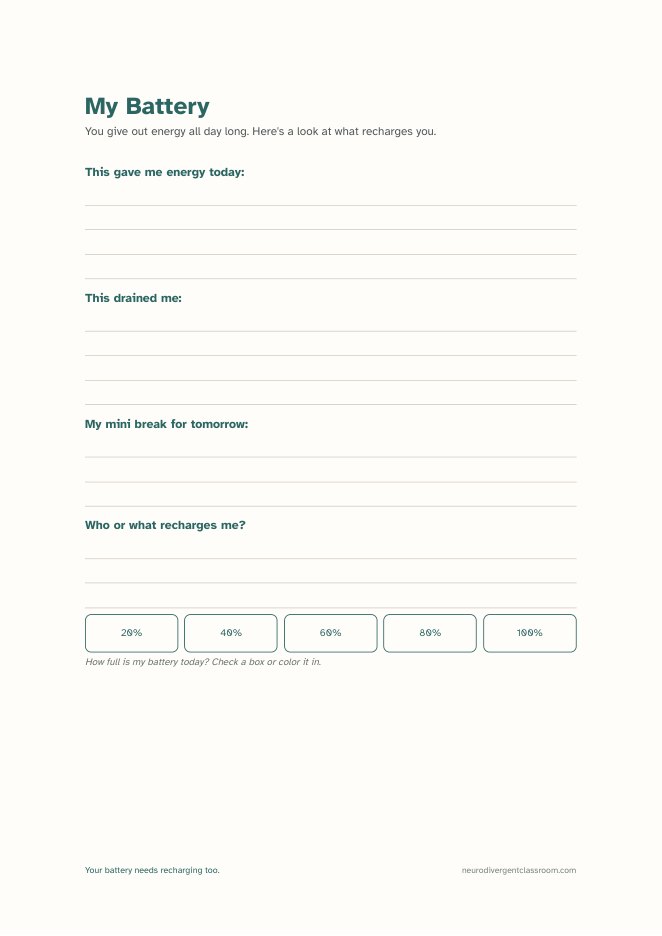
You will find these and all other printables collected in the Teacher Portal (members only).
You don't have to control every movement in the room. When you watch for whether learning is happening rather than whether it's quiet, you take a bit of pressure off your own shoulders, and off your students' too.
Sources
- Li et al.: Effect of physical activity on attention in school-age children with ADHD, 2023, accessed October 14, 2026.
- Staff et al.: The relation between classroom setting and ADHD behavior, 2023, accessed October 14, 2026.
- Centers for Disease Control and Prevention: ADHD in the Classroom, accessed October 14, 2026.
- Autistica: Supporting autistic people who are overwhelmed or having a meltdown, accessed October 14, 2026.