Blog
Hearing Protection Box: Giving Students a Choice About Noise
The bell rings. Chairs scrape across the floor, voices pile on top of each other, and somewhere down the hall a door bangs shut. For you, it's just another change of periods, maybe your fifth of the day. For some of your students, it's the start of the hardest stretch of the morning.

School is loud for teachers, too. After a day of packed hallways, recess duty, and an evening meeting tacked on at the end, who doesn't crave a bit of quiet? Remembering that feeling helps me understand students who take in sound far more intensely than most of us. A hearing protection box is a small thing, but it can hand them a real choice.

Not everyone hears sound the same way
Sound processing is how the brain picks out and sorts what we hear, and it doesn't work the same way for everyone. Some students catch every hum and rustle in the background, while others can barely follow what's being said when several people talk at once.
Sudden noises can be stressful, too, and volume is only part of the story. Whether a sound is predictable, how close it is, and whether you can get away from it all make a difference. School bells, hallways, and the cafeteria tend to be among the toughest places, which is why hearing protection and headphones are worth considering as adjustments.
One thing to keep in mind: a student who reaches for the box isn't proving any particular diagnosis. The box is a support, nothing more and nothing less.

When it all gets to be too much
You may have come across the words overload and shutdown. Overload happens when more stimuli pour in at once than the brain can process. A shutdown is one way a student might pull back under heavy overwhelm: they go quiet and barely respond to what's going on around them. A meltdown tends to show overwhelm more visibly, through crying or screaming, for example.
These words describe reactions. They're no substitute for a professional assessment, and it isn't your job to put anyone in a category. In the moment, three things help most: fewer words, fewer stimuli, and more distance.

What to put in a hearing protection box
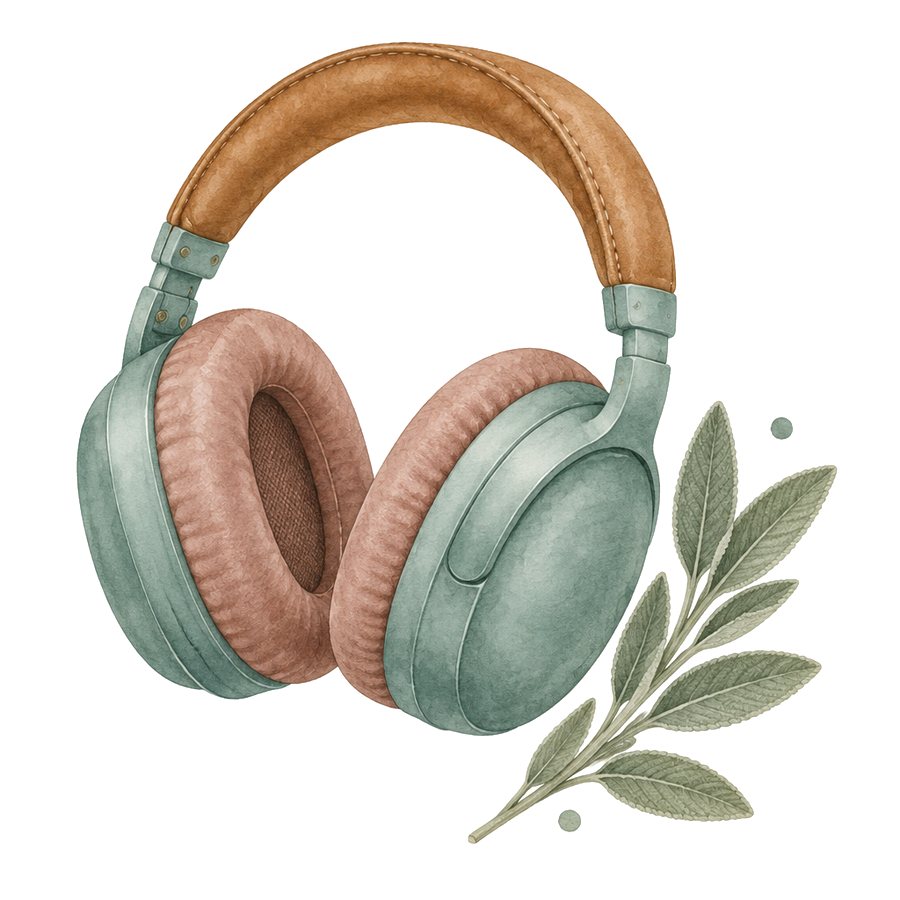
Not every student can tolerate the same kind of hearing protection, so a good box offers a few options. Think soft earmuff-style protectors in several sizes and plain headphones that don't play any music, plus a visual cue for work time, a card showing the return signal you've agreed on, and a clean storage bag for each use.
Follow your school's guidelines on fit, hygiene, and safety. Hearing protection should never leave a student permanently unable to hear important announcements, and during a fire alarm, an evacuation, or any other emergency, the procedure has to be crystal clear for everyone.
How to introduce the hearing protection box
-
1. Present it as an option for everyone
Introduce the box as one of several ways to work, open to the whole class. That way it never turns into the visible badge of one particular student.
-
2. Practice while things are calm
Walk through putting the protection on, taking it off, and putting it back, with no time pressure. While you're at it, agree on how a student can let you know they need help.
-
3. Agree on when it can be worn
Talk it over together: when is it okay to wear the protection? Class discussion, partner work, and transitions are very different situations, so it's worth looking at each one on its own.
-
4. Keep an eye on the task
Check that the student understands the assignment and is actually working on it. Later on, ask whether the protection helped or got in the way.
Still part of the class, headphones and all
A student wearing headphones should still feel like they belong, so build partner work, eye contact, and signals into your plan right from the start. Sometimes a quiet place to work fits better than hearing protection, and sometimes what's needed is a short break outside the room. Predictable routines and quiet corners can soak up a lot, too.
Hearing protection is never a reward or a punishment. It's one possible adjustment for a specific situation. Decide together how the student will take it off again; a picture signal often works better than a long explanation.
And don't forget the room itself. I've often seen how much small changes add: a closed door, fewer side conversations, a different seat. Start with one small adjustment, change just one thing, and watch what happens. The box won't replace your agreements about lessons, transitions, and breaks, but it can be a good place to begin.

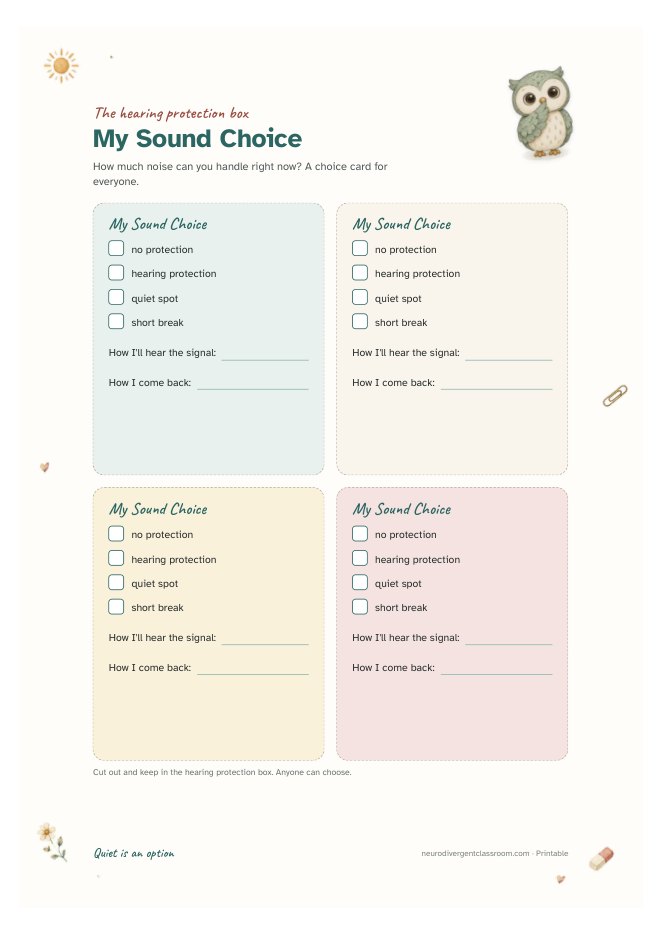
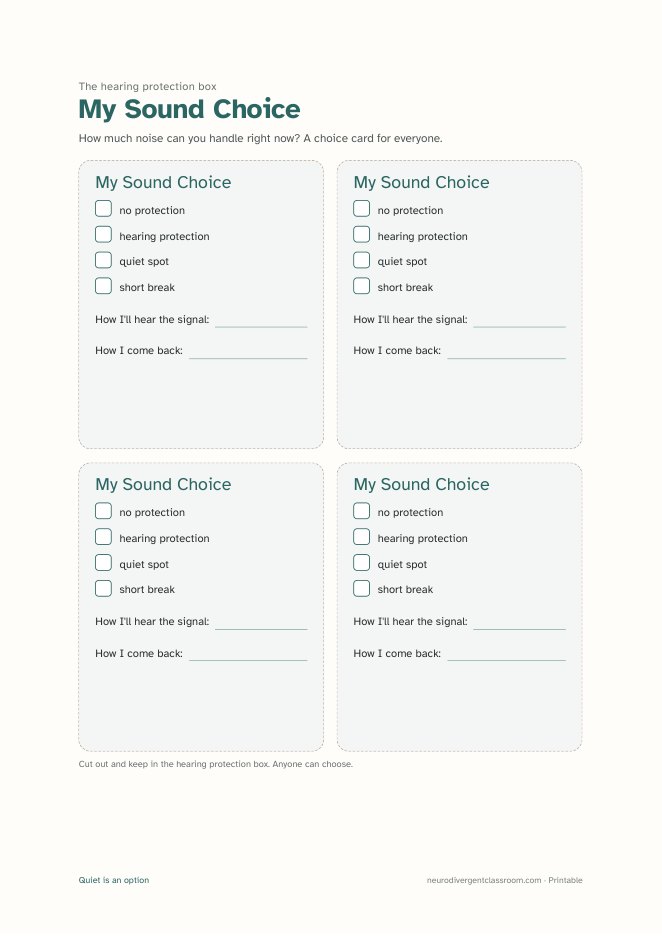
Download: “My Sound Choice”
This card turns the hearing protection box into something students can actually hold. They pick “no protection,” “hearing protection,” “quiet spot,” or “short break” to show what they need right now, without having to say much. Underneath are “How I'll hear the signal” and “How I come back,” so you can work out the way back into class together ahead of time. The card works in elementary school as well as middle school and contains no names, diagnoses, or health information.
Every printable comes in a colorful and a simple version. Choose the one you like to work with. Click the image to open the printable.
And one just for you
A page to take a breath and write things down, no lesson planning involved.
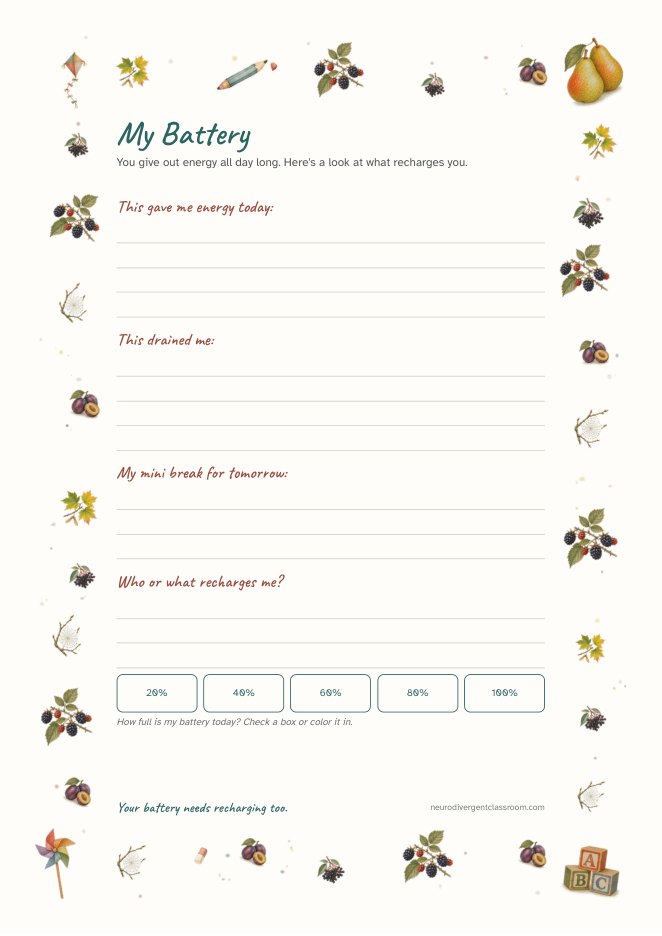
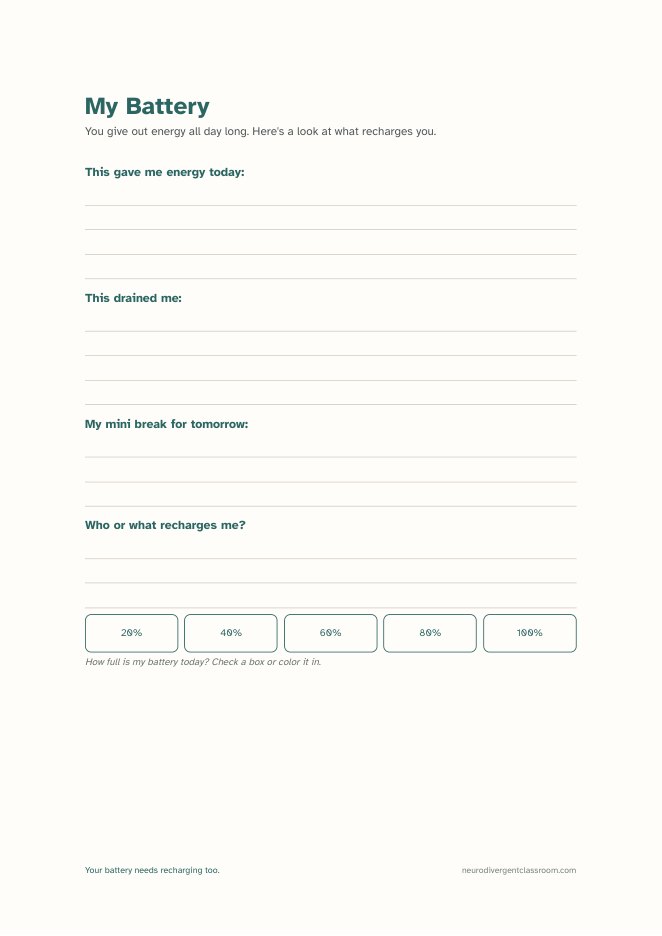
You will find these and all other printables collected in the Teacher Portal (members only).
Nobody expects you to make school quieter than it is. What you can offer is a small, quiet way out, and that often means more than it looks from the outside.
Sources
- National Autistic Society: Reasonable adjustments for autistic pupils’ sensory differences, published 2019, reviewed 2025, accessed October 14, 2026.
- Autistica: Supporting autistic people who are overwhelmed or having a meltdown, accessed October 14, 2026.